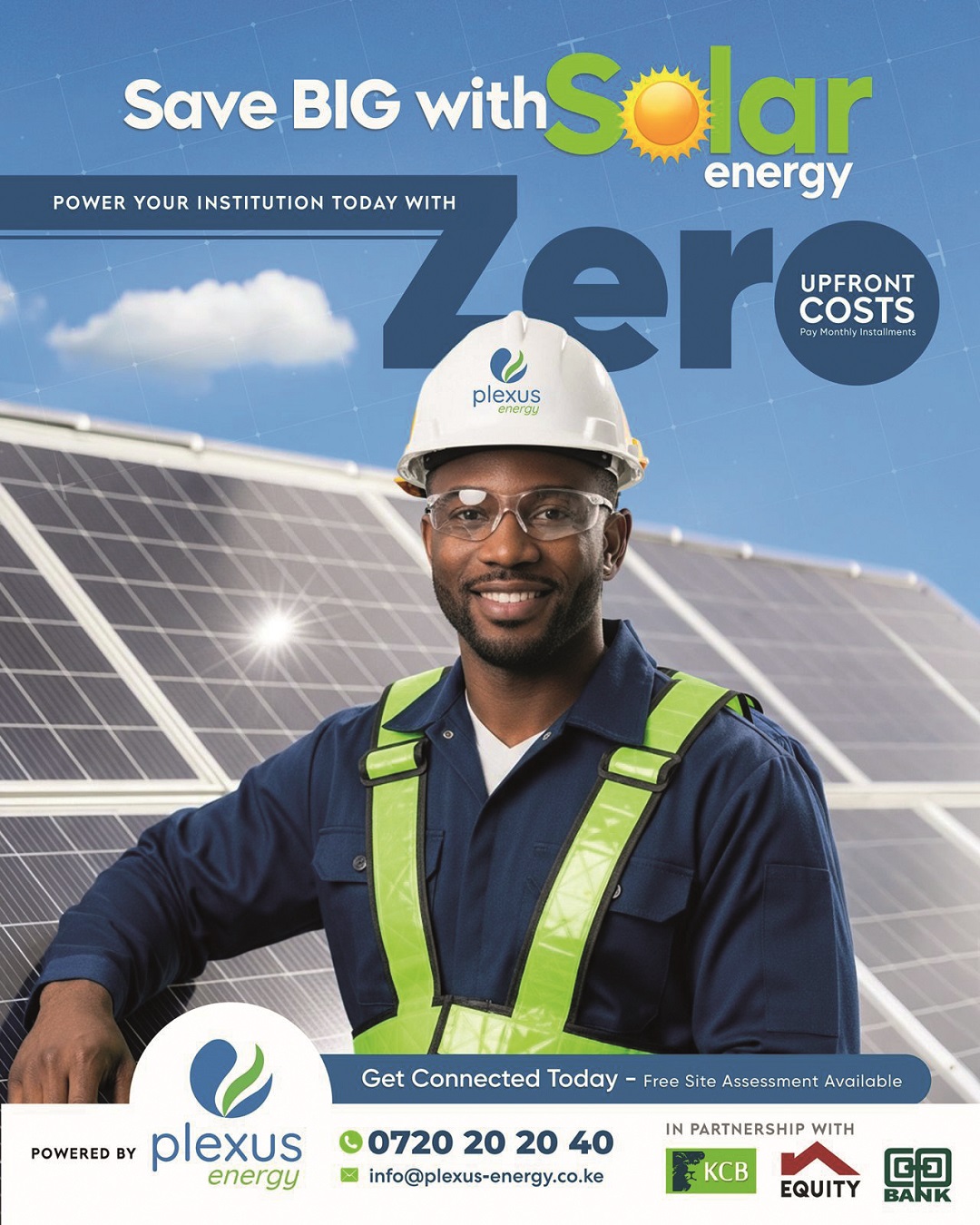




Edward Kinyanjui on Energy, Innovation and the Future of Plexus Energy
For many African businesses, energy is no longer simply a utility bill. The cost, reliability and availability of power can determine productivity, profitability and, in some cases, whether operations can continue uninterrupted.
That is the challenge Plexus Energy has spent more than a decade working to solve.
Rather than beginning with solar panels or a particular technology, Plexus Energy starts by understanding the customer’s energy problem: how much power they consume, when they consume it, what interruptions cost their organisation and where efficiencies can be achieved.
The objective is simple: help customers access power that is more reliable, affordable and sustainable.
From there, Plexus designs solutions that can combine solar generation, battery energy storage, grid electricity, backup power, energy monitoring and other technologies depending on the customer’s requirements.
“Our job is not simply to sell solar,” says Edward Kinyanjui, Founder and Managing Director of Plexus Energy. “We first need to understand how much power a customer needs, when they need it and what they are trying to achieve. Only then can we recommend the right combination of technologies.”
It is an approach that increasingly places Plexus at the intersection of energy, engineering, technology and finance.
And the company has tested that approach in the real world.
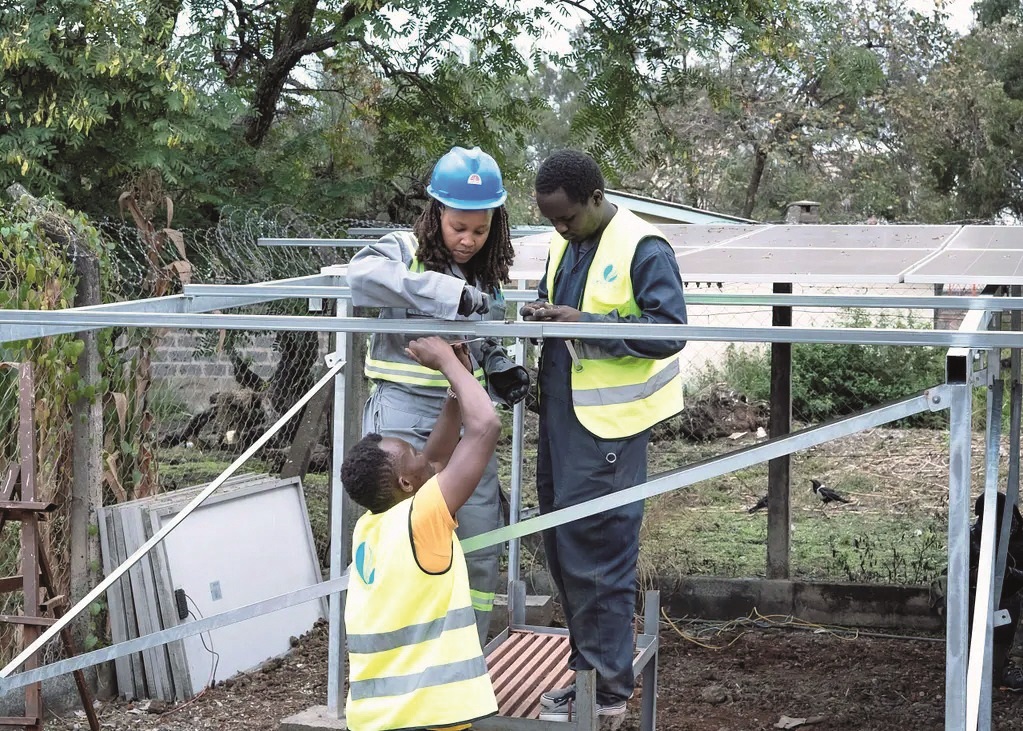
Over the years, Plexus has undertaken energy projects serving customers across the banking sector, schools and educational institutions, NGOs, commercial organisations and manufacturing entities, where reliability, cost savings and continuity of operations are critical.
For Edward, this is important because energy solutions must ultimately prove themselves commercially.
“Renewable energy has to make sense beyond the environmental argument,” he explains. “It must help the customer become more efficient, reduce costs or improve reliability. Ideally, it should achieve all three.”
From Power Blackouts to an Energy Business
The origins of Plexus Energy can be traced back to a problem Edward had experienced from childhood: unreliable electricity.
“Growing up, power blackouts were something we lived with,” he recalls.
It was later, while working in the telecommunications industry, that he began to appreciate the economic consequences of unreliable power.
In telecommunications, downtime is not merely inconvenient. When infrastructure loses power, services are interrupted and revenue can be lost.
At the time, generators were the conventional answer to unreliable electricity. But generators brought their own challenges: fuel costs, servicing, repairs, noise and the environmental impact of continuously burning diesel.
That raised an important question for Edward: Was there a better way to provide reliable power?
As solar technology improved and became increasingly commercially viable, the possibilities became clearer.
Edward began looking at businesses with significant energy requirements and asking whether renewable energy could be integrated with existing power infrastructure to reduce costs while improving resilience.
That thinking eventually developed into Plexus Energy.
What started with a concern about backup power gradually evolved into a broader mission: helping organisations understand and manage energy more intelligently.
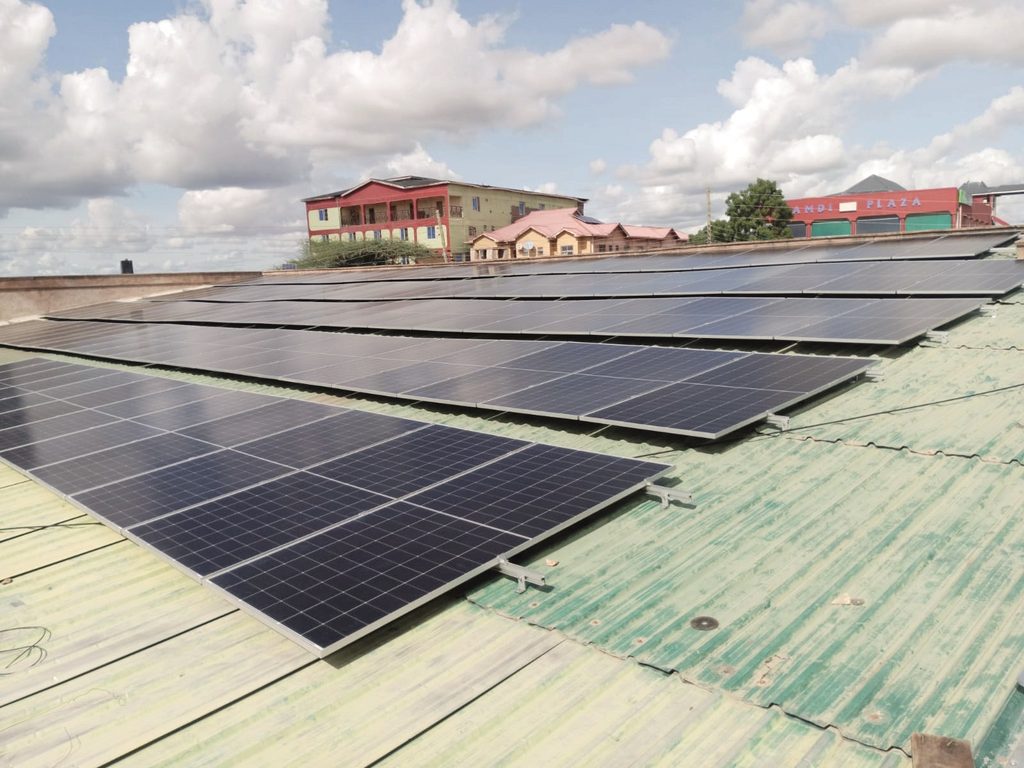
Solving the Energy Problem, Not Selling the Equipment
The distinction is important.
A customer may initially approach an energy company asking for solar panels, batteries or an inverter. But according to Edward, those products should never be the starting point.
The starting point should be the customer’s energy profile.
“When does the organisation consume most of its electricity? What equipment is being powered? What happens at night? What are the critical loads? How reliable is the grid? Is there a generator? How much is the customer spending on electricity and fuel?”
Answering these questions changes the conversation.
A manufacturing plant with heavy daytime production has different requirements from a boarding school that continues consuming electricity throughout the night.
A bank branch has different continuity requirements from a residential customer.
A hospital or NGO facility operating critical equipment may prioritise reliability differently from an organisation primarily seeking to reduce its electricity bill.
Solar, therefore, is not a one-size-fits-all solution.
For some organisations, a grid-tied solar system may provide the strongest financial return.
Others may require battery storage.
Some require integration between solar, batteries, generators and the electricity grid.
And in some cases, the most immediate intervention may be improving energy efficiency before installing additional generation capacity.
“We have to understand the problem before prescribing the solution,” Edward says. “Technology should serve the customer’s need, not the other way around.”
From Solar Installation to Energy Management
Another area Plexus believes will increasingly differentiate energy companies is data.
Modern energy systems can generate extensive information about how an organisation consumes electricity, how much energy a solar system produces, when batteries charge and discharge and when the organisation draws electricity from the grid.
Plexus incorporates monitoring into its installations to help customers better understand these patterns.
That information can reveal opportunities that might otherwise be missed.
A company may discover that a significant amount of electricity is being consumed outside its productive hours.
A facility might identify equipment creating unusually high demand.
A solar installation may reveal opportunities to shift certain loads into daylight hours, when renewable generation is highest.
“The data gives us a history of the customer’s energy consumption,” Edward explains. “That allows us to have a much more informed discussion about how the customer can improve efficiency and reduce costs.”
This moves the relationship beyond installing equipment.
The longer-term opportunity is to help customers continuously optimise how they produce, store and consume energy.
Proven Across Different Sectors
Plexus Energy’s journey has also demonstrated that the energy challenge cuts across industries.
The company has undertaken projects involving banks and financial institutions, schools, NGOs, commercial facilities and manufacturing organisations.
Each sector presents a different problem.
For banks, business continuity and reliability can be critical.
For schools, energy can influence everything from lighting and administration to kitchens, laboratories, ICT infrastructure and boarding facilities.
NGOs may operate in locations where dependable electricity is essential to their programmes but grid infrastructure is limited or unreliable.
Manufacturers, meanwhile, typically look closely at the relationship between energy costs, production schedules and operating margins.
Working across these environments has reinforced one of Plexus Energy’s core beliefs: a successful energy project should be engineered around the customer’s operation rather than simply around available equipment.
The company’s continued work with established organisations has also become an important measure of its progress.
“For us, one of our greatest achievements is the trust customers continue to place in us,” says Edward. “Working repeatedly with established organisations tells us that the quality, service and value we provide are being recognised.”
Solar and the Grid: Partners, Not Competitors
Edward also challenges the view that distributed renewable energy and national electricity utilities must necessarily compete.
Kenya Power, for example, has built an extensive national electricity distribution network that remains central to Kenya’s economy.
Solar can complement that infrastructure.
Commercial and industrial customers can generate part of their electricity during the day while remaining connected to the grid.
Battery storage can help customers manage interruptions, peak demand and periods when solar production is unavailable.
Generators may still serve as an additional layer of resilience in certain facilities.
The future, therefore, may not necessarily be about choosing one source of power over another.
It is increasingly about integrating several sources intelligently.
“We see solar as complementary,” Edward says. “The grid remains an important part of the energy ecosystem. The opportunity is to use technology to create a more reliable and efficient combination for the customer.”
Making Energy Projects Financeable
One of the largest barriers to renewable energy adoption remains the upfront capital required.
A customer may have a strong energy case for solar but still need to preserve capital for its core operations.
Plexus therefore increasingly sees financing as part of the energy solution.
Working with financing partners allows customers to explore different structures depending on the project and their financial position.
These can include traditional bank financing, operating leases and Power Purchase Agreements, where appropriate.
Instead of asking only:
“How much does this solar system cost?”
the more useful question becomes:
“Can the project generate sufficient savings and value to justify the investment, and can the financing be structured around those economics?”
“Financing makes it easier for customers to adopt renewable energy without necessarily paying the entire cost upfront,” Edward explains.
For businesses, this can change renewable energy from a large capital expenditure discussion into a broader conversation about operating costs, cash flow and long-term energy strategy.
Building a Business Through Difficult Cycles
Plexus Energy’s growth has not been without challenges.
Like many entrepreneurial businesses, access to affordable capital was particularly difficult during the company’s early years.
Without a long financial history, bank financing could be expensive or unavailable.
The company initially relied heavily on customer advances to finance projects.
As Plexus grew, working capital remained an important constraint, especially as projects increased in size.
Other challenges followed.
Economic downturns affected investment decisions.
Election periods created uncertainty.
Technology changed rapidly.
International competitors entered African markets with greater financial resources and access to global supply chains.
But Edward believes these challenges ultimately strengthened the company.
“Technology and competition require us to remain agile,” he says. “You cannot assume that what worked yesterday will continue working tomorrow.”
After 16 years in business, resilience itself has become part of the Plexus story.
Developing People Alongside Projects
Edward’s leadership philosophy has also evolved with the company.
Managing a predominantly young workforce has taught him the importance of remaining open to different perspectives.
“I believe nobody knows everything,” he says. “I learn from my team as well, particularly when it comes to technology.”
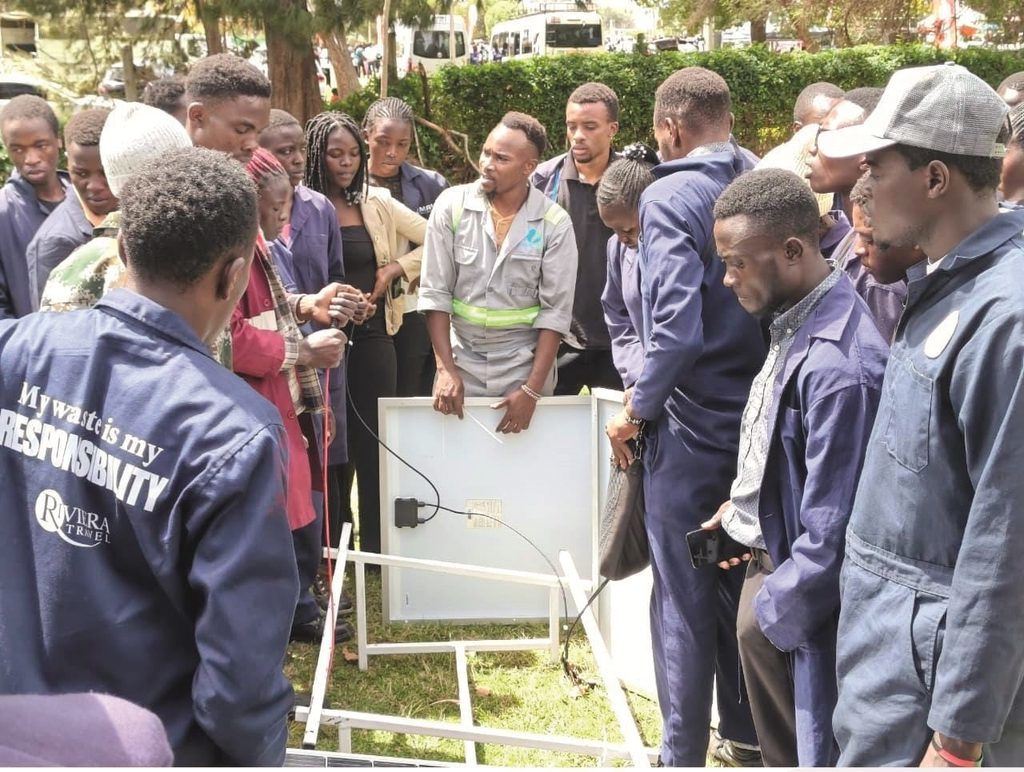
This philosophy extends into Plexus Energy’s internship and training programmes.
The company provides opportunities for engineering students to gain practical exposure to the renewable energy sector, including project design, installation, operations and maintenance.
Some employees who entered the company through internship programmes have progressed into more senior responsibilities.
Edward believes this practical exposure is particularly important in a technical industry.
“There is a difference between what you learn in a classroom and what happens when you arrive at a real project site,” he says. “Young engineers need exposure to both.”
Plexus also sees an opportunity to share industry knowledge more broadly with aspiring entrepreneurs interested in the energy sector.
Looking Beyond Kenya
Regional diversification is another part of Plexus Energy’s longer-term strategy.
The company is exploring opportunities in markets including Uganda, Tanzania and the Democratic Republic of Congo, particularly where customers and partners have operations across several countries.
The rationale is both commercial and strategic.
Africa’s energy deficit remains substantial, while demand continues to rise.
Population growth, urbanisation, industrialisation, mechanised agriculture, digital infrastructure and the gradual expansion of electric mobility will all place additional pressure on electricity supply.
At the same time, declining renewable-energy technology costs and improvements in battery storage are opening new possibilities.
Edward believes this creates a significant opportunity for African companies capable of understanding local conditions while deploying increasingly sophisticated technologies.
“Africa has a huge energy market that is still developing,” he says. “The population is young, industries are growing and lifestyles are changing. All of this requires energy.”
Energy as an Enabler of Africa’s Development
For Edward, the importance of energy goes beyond electricity itself.
Affordable and reliable electricity enables other technologies to function.
A digital economy cannot thrive without power.
Manufacturing cannot scale without dependable energy.
Agricultural processing and cold chains require electricity.
Schools increasingly depend on digital infrastructure.
Hospitals rely on equipment that must operate continuously.
“Technology can only deliver its full benefit when energy is available, reliable and affordable,” Edward says.
This is why Plexus increasingly sees its role as part of a broader African transformation.
Renewable energy is one component.
Battery storage is another.
Monitoring, digitalisation, efficiency and finance will become increasingly important as customers demand more sophisticated solutions.
The future energy company, Edward believes, will need to understand all of them.
Lessons for the Next Generation
Edward’s entrepreneurial journey has also shaped his advice to young Africans.
One of the biggest barriers he sees is not always access to opportunity but the confidence to start.
Traditional employment opportunities are becoming increasingly difficult to absorb a rapidly growing young population.
At the same time, technology is creating new forms of work, entrepreneurship and global market access.
“The challenge for many young people is taking the first step,” Edward says. “We need to expose them to information and show them that opportunities exist beyond traditional employment.”
He points to areas such as renewable energy, recycling, waste management, cold-chain infrastructure, digitisation and agricultural processing as sectors where young entrepreneurs can build businesses by solving real problems.
The principle is straightforward: identify a problem, understand it deeply and develop a solution customers are prepared to pay for.
It is, in many ways, the same principle that led to the creation of Plexus Energy.
Powering the Next Chapter
Sixteen years after its beginnings, Plexus Energy continues to evolve.
It has moved from responding to power interruptions toward addressing a much broader question:
How can businesses and institutions access power that is reliable, affordable, sustainable and intelligently managed?
The answer will not always be solar.
It may involve solar generation, batteries, the electricity grid, backup systems, monitoring, energy-efficiency measures, financing—or an intelligent combination of them.
What matters is the outcome.
For Plexus Energy, the next chapter is about expanding that approach across more organisations, more industries and ultimately more African markets.
“Challenges will always exist,” Edward says. “The important thing is how we turn those challenges into opportunities.”
And as Africa’s demand for energy continues to grow, the opportunity may be larger than ever.