



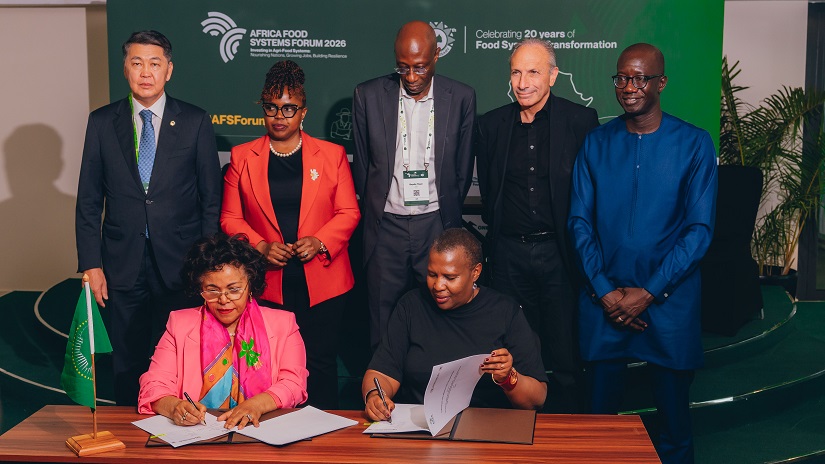
AGRA has entered into a series of partnerships with leading African and international organisations aimed at accelerating farmer prosperity across the continent. The agreements were formalised in Kigali as the Africa Food Systems Forum drew to a close.
The partners include TradeMark Africa, the African Union Development Agency-NEPAD (AUDA-NEPAD), the International Chamber of Commerce (ICC), the African Seed Trade Association (AFSTA), the International Seed Federation (ISF), the Islamic Organisation for Food Security (IOFS), the International Fertilizer Development Center (IFDC) and the Global Alliance for Improved Nutrition (GAIN).
The alliance addresses three interlinked constraints holding back agricultural transformation, as highlighted in the recently released Impact Learning and Foresight Report: low productivity, weak value creation, and fragmented institutional capability.
Speaking at the briefing, AGRA President Alice Ruhweza called for a more integrated approach to addressing the barriers limiting agricultural and food-systems transformation.
“The next phase of agricultural transformation must move beyond isolated interventions. Therefore, we are calling for a Renewed Alliance that brings together capabilities across governments, businesses, and researchers that turns decades of agricultural progress into lasting farmer prosperity”
Collectively, the partnerships span seed and input systems, soil health, nutrition, regional trade, private-sector development, policy coordination and institutional capacity. They aim to strengthen agricultural productivity, help farmers and local enterprises capture greater value, and build the domestic capability required to sustain progress over time.
The Renewed Alliance is also intended as a broader platform for organisations working in climate resilience, water, logistics, energy, finance and other enabling sectors to contribute their expertise to Africa’s agrifood systems transformation.
The initiative marks a shift from building individual components of agricultural systems towards coordinating complementary capabilities around farmer prosperity. Its success will be measured by whether productivity gains translate into higher incomes, better jobs, affordable food and resilient institutions that can sustain progress.