



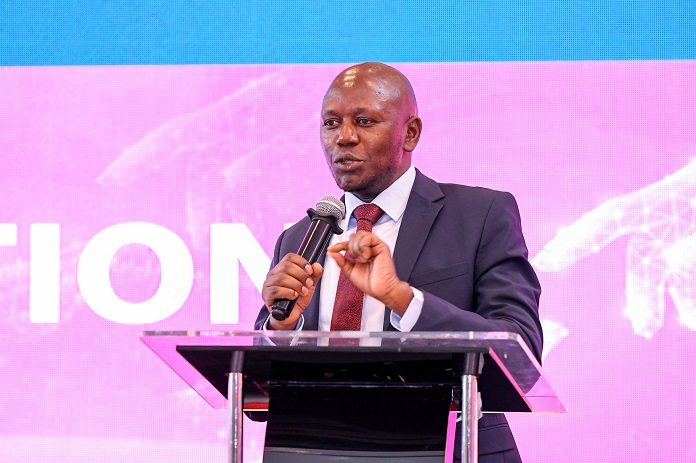
The launch of the Kenya Re Foundation signals a renewed commitment to investing in human capital, expanding educational opportunities and building a more resilient society
The Kenya Reinsurance Corporation has opened a new chapter in its corporate social investment journey following the official launch of the Kenya Re Foundation, establishing a dedicated platform to support vulnerable communities and create opportunities for future generations.
The launch brought together Cabinet Secretary for the National Treasury FCPA John Mbadi, Kenya Re Group Managing Director Dr. Hillary Wachinga, Acting Chairman Jackie Nyandeje, board members and other stakeholders, highlighting the growing importance of partnerships between the private sector and government in advancing Kenya’s development agenda.
At the centre of the initiative is a commitment to education as a driver of social mobility, economic growth and national transformation.
Speaking during the launch, Treasury Cabinet Secretary John Mbadi underscored the importance of developing the country’s human capital, describing it as a critical resource for Kenya’s future.
“Our biggest asset as a country is human capital, and the Kenya Re Foundation is investing in it by supporting gifted young Kenyans from all 47 counties through university,” Mbadi said.
He added that connecting education, skills and industry would be essential in preparing young people for an increasingly competitive global labour market.
“Building a strong link between skills, industry and the economy is what will prepare our young people for jobs anywhere in the world,” he said, pledging the full support of his ministry and the Government of Kenya for the foundation.
His remarks reflect the growing need to align educational opportunities with emerging economic demands, particularly as technological advancement and new industries continue to reshape the skills required by employers.
Opening Doors for Exceptional Students
One of the foundation’s flagship initiatives is an annual scholarship programme targeting at least 10 academically exceptional but vulnerable students seeking admission to Ivy League universities.
The programme will support candidates who attain straight As in all subjects in the Kenya Certificate of Secondary Education (KCSE) examinations and are total orphans without guardians to finance their education.
The selection framework provides for eight beneficiaries representing the country’s eight former provinces, alongside two additional places for Nairobi. The first cohort is expected to be recruited in February 2027.
For students who combine exceptional academic ability with significant financial hardship, the initiative could open doors to international learning opportunities that might otherwise remain inaccessible.
Beyond tuition and access to prestigious institutions, the broader ambition is to nurture future professionals and leaders whose knowledge and experience can contribute to Kenya’s development.
The programme also reflects a long-term approach to human capital investment, recognising that the benefits of education extend beyond individual achievement to families, communities and the wider economy.
A Long-Term Investment in Social Transformation
Kenya Re has committed KSh78.47 million to the foundation for 2026 and plans to allocate 2 per cent of its profit after tax annually from 2027. The corporation is also seeking additional contributions from partners to strengthen the initiative.
For Dr. Hillary Wachinga, the foundation provides a permanent institutional framework for the corporation’s social investment ambitions.
“Kenya Re has been an anchor of financial security in Kenya since 1971. With the Kenya Re Foundation, that support now has a permanent home with a clear mandate and independent reporting,” Wachinga said.
He explained that the initial funding would support a wider social mission encompassing education for orphaned children who excel academically, inclusion of persons with disabilities and climate resilience.
“This is how we build a more resilient society, and we invite partners to join us,” he added.
The proposed funding model links the foundation’s future resources to Kenya Re’s financial performance, creating a basis for sustained support while providing an opportunity for other organisations to contribute.
Partnerships will be important in expanding the foundation’s reach, strengthening its programmes and ensuring that its resources translate into meaningful outcomes for beneficiaries.
Beyond Education: Advancing Inclusion and Resilience
While education is a central pillar of the foundation’s initial programme, its broader mandate reflects a commitment to addressing other development challenges.
The foundation intends to build on Kenya Re’s existing community initiatives, including the Niko Fiti: Ability Beyond Disability campaign, which supports persons living with disabilities through assistive devices and other interventions.
Environmental conservation and climate resilience also feature among its priorities, recognising the importance of protecting communities against environmental risks and supporting sustainable development.
These areas present an opportunity to connect social investment with practical interventions that improve livelihoods, promote inclusion and strengthen community resilience.
Ag Chairman for Kenya Re Jackie Nyandeje placed particular emphasis on the lasting impact the foundation hopes to achieve through its programmes.
“True resilience is not measured by headlines, our goal is to help create a new generation of African leaders who will go back and make a difference in their communities and inspire others to believe in what is possible,” Nyandeje said.
Her remarks capture the foundation’s broader ambition: to support beneficiaries in ways that extend beyond immediate financial assistance and encourage lasting contributions to society.
Building Partnerships for Lasting Impact
The success of the Kenya Re Foundation will depend on its ability to translate its commitments into effective programmes, establish strong partnerships and demonstrate measurable results.
For the scholarship programme, transparent selection processes, sustained student support and clear monitoring of academic progress will be important in ensuring that the intended beneficiaries receive meaningful assistance.
Collaboration with educational institutions, development partners and private-sector organisations could also strengthen mentorship opportunities and help beneficiaries connect their education to future careers.
The proposed annual allocation of 2 per cent of Kenya Re’s profit after tax offers a framework for continuity, while additional partner contributions could help the foundation broaden its reach.
As companies increasingly seek to demonstrate the social value of their operations, structured foundations can provide a mechanism for coordinating resources around defined development priorities. Their long-term credibility, however, rests on accountability, effective implementation and demonstrable impact.
A Legacy Beyond Reinsurance
Since 1971, Kenya Re has built its business around providing reinsurance services to insurance companies in Kenya and international markets. The launch of the foundation adds another dimension to its contribution to the economy by placing greater emphasis on human development and community wellbeing.
The initiative demonstrates how corporate resources can be directed towards addressing barriers that prevent talented individuals and vulnerable communities from accessing opportunities.
For students with exceptional academic potential but limited family support, the scholarship programme represents a chance to pursue ambitions that might otherwise be constrained by financial circumstances. For communities, the foundation’s wider focus on disability inclusion and climate resilience offers a platform for interventions aimed at improving quality of life.
Ultimately, the foundation’s success will be measured by the opportunities it creates, the lives it improves and the extent to which its beneficiaries contribute to society.
As Kenya Re begins this new chapter, the challenge is to turn its commitments into sustainable outcomes. If effectively implemented, the Kenya Re Foundation could become a significant vehicle for nurturing talent, promoting inclusion and helping build a more resilient future for Kenya and the wider African continent.